


Top 20 Youth Soccer Balance Drills

CRFC BLOGS
LATEST BLOGS & NEWSLETTERS
Top 20 Youth Soccer Balance Drills
Balance is a critical skill for youth soccer players, contributing to better ball control, agility, and overall performance. This article outlines various youth soccer balance drills and exercises tailored for players, focusing on enhancing their stability, coordination, and core strength. By incorporating these drills into their training routines, young players can develop a solid foundation for advanced soccer techniques.
Youth Soccer Balance
Balance is essential for soccer players of all ages, particularly for youth players who are developing their physical skills. Good balance allows soccer players to control the ball effectively, make quick directional changes, and maintain stability during challenging plays. By improving balance, young players can enhance their overall performance on the field, making them more confident and capable in various game situations. Coaches and parents should encourage young players to practice balance exercises regularly as part of their soccer-specific balance training program.
Basic Balance Drills for Youth Soccer Players
Starting with basic youth soccer balance exercises helps build foundational skills crucial for soccer. These simple drills are effective for improving stability and control.
Single-Leg Stands
Single-leg stands are fundamental exercises that help players develop the stability to control the ball and maintain their stance during play. This basic soccer balance drill is easy and can be practiced anywhere, making it a great starting point for young players.
Method
Stand on one leg, holding the position for a set period. Switch legs and repeat.
Benefits
Improves balance and strengthens leg muscles.
Tandem Stance
This exercise is great for improving balance in a controlled manner. It teaches players to maintain stability even when their feet are positioned narrowly. Tandem stance drills help develop the fine motor skills needed for precise soccer movements.
Method
Stand with one foot directly in front of the other, heel to toe. Hold the position, then switch feet.
Benefits
Enhances balance and stability.
Single-Leg Ball Toss
This drill is excellent for enhancing both coordination and balance. It challenges players to maintain their stance while handling the ball, which is crucial during actual game scenarios.
Method
Stand on one leg and toss a small ball in the air, catching it while maintaining balance. Switch legs and repeat.
Benefits
Improves hand-eye coordination and balance.
Balance Beam Walk
Walking along a straight line or balance beam helps players develop their balance and coordination in a straightforward and effective way. This exercise is excellent for beginners who need to build their confidence and coordination gradually.
Method
Walk along a straight line or balance beam, maintaining balance.
Benefits
Improves coordination and balance.
Standing Knee Lift
This exercise focuses on core strength and balance, which are essential for maintaining control during soccer movements. The standing knee lift is a basic balance drill that helps players improve their stability and control.
Method
Lift one knee to waist height and hold. Switch legs and repeat.
Benefits
Strengthens core and improves balance.
Toe Taps
Toe taps are a simple yet effective drill that helps beginners develop a feel for the ball while improving their balance. This exercise is beneficial for young players who are just starting to learn how to handle the ball.
Method
Tap the ball lightly with the toes of one foot while standing on the other leg. Alternate feet.
Benefits
Enhances balance, coordination, and touch.
Advanced Balance Drills for Youth Soccer Players
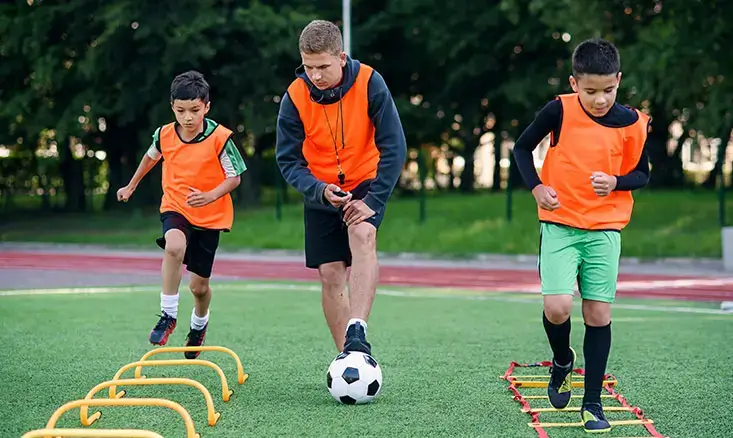
As youth soccer players progress, more challenging drills can help further improve their balance and stability. Advanced balance drills for soccer players are designed to push their limits and enhance their performance.
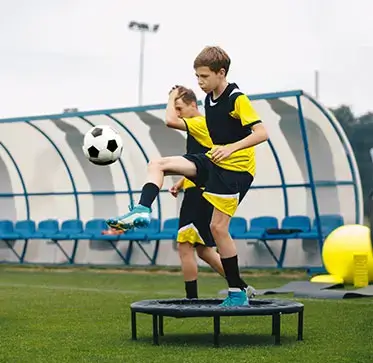
Single-Leg Balance on Unstable Surface
Using an unstable surface challenges players to maintain balance, enhancing their stability and strength in the ankles. This advanced balance exercise is excellent for building the strength and coordination needed for high-level soccer play.
Method
Stand on one leg on a balance board or cushion.
Benefits
Increases stability and strengthens ankle muscles.
Plyometric Hops
Plyometric hops help players develop explosive strength and balance, which are crucial for quick field movements. This drill is a key part of soccer-specific balance training, helping players enhance their agility and power.
Method
Perform small hops on one leg, maintaining control and balance.
Benefits
Improves explosive power and balance.
Single-Leg Squats
Single-leg squats are challenging but highly effective for improving both strength and balance. This drill helps players develop the muscle strength needed to maintain stability during dynamic movements.
Method
Perform squats on one leg while keeping the other leg extended forward.
Benefits
Strengthens leg muscles and improves balance.
Youth Soccer Pressure Cover Balance Drills
These youth soccer pressure cover balance drills focus on maintaining balance under pressure, simulating game situations. Soccer pressure cover balance drills help players develop the ability to stay balanced and stable even when under physical pressure from opponents.
Pressure and Release Drill
This drill helps players learn to maintain balance and react quickly under pressure, similar to real-game scenarios. The pressure and release drill is an effective way to train players to handle physical challenges while maintaining their balance.
Method
Alternate between applying pressure and releasing while balancing on one leg.
Benefits
Develop balance and reaction speed under pressure.
Partner Push Drill
The partner push drill simulates physical challenges players might face during a game, helping them develop the ability to stay balanced and stable. This drill is a great way to practice balance under realistic conditions.
Method
Partners gently push each other while maintaining balance.
Benefits
Enhances stability and balance in dynamic situations.
1v1 Shielding Drill
The 1v1 shielding drill teaches players how to use their bodies to protect the ball while maintaining balance. This exercise is particularly useful for developing the skills needed to defend against opponents during a game.
Method
Players take turns trying to shield the ball from their partner while maintaining balance.
Benefits
Improves balance, strength, and ball protection skills.
Core Strength and Balance Exercises
Combining core strength exercises with balance training enhances overall stability and control. Core strength and balance exercises are essential for developing the foundational strength needed for effective balance.
Plank with Leg Lift
This exercise targets the core while also challenging balance, making it a comprehensive stability drill. The plank with leg lift is an excellent way to combine core strength and balance training.
Method
Hold a plank position and lift one leg, alternating legs.
Benefits
Strengthens core and improves balance.
Side Plank with Arm Lift
The side plank with arm lift is a challenging exercise that enhances lateral stability. This exercise is excellent for developing the core strength needed for maintaining balance during dynamic movements.
Method
Hold a side plank position and lift the top arm towards the ceiling.
Benefits
Strengthens core and improves lateral stability.
Balance Drills for Soccer-Specific Movements
These drills are tailored to the movements and demands of soccer, helping players improve their balance in relevant situations. Balance drills for soccer-specific movements help players develop the skills needed for precise and effective play.
Figure 8 Dribbling with Balance Focus
Figure 8 Dribbling helps players develop balance while performing precise dribbling movements. This drill is an excellent way to improve balance and ball control simultaneously.
Method
Dribble the ball in a figure 8 pattern, focusing on balance.
Benefits
Enhances dribbling skills and balance in tight spaces.
Side-to-Side Ball Pass
This drill enhances players’ ability to maintain balance while making lateral passes, a common movement in soccer. The side-to-side ball pass is a great way to practice balance and coordination in a soccer-specific context.
Method
Pass the ball side-to-side with a partner while maintaining balance.
Benefits
Improves lateral movement and balance.
Backpedal and Turn Drill
The backpedal and turn drill helps players develop the ability to change directions quickly while maintaining balance. This drill is particularly useful for defenders who need to track and react to offensive players.
Method
Backpedal for a set distance, then quickly turn and sprint forward while maintaining balance.
Benefits
Improves agility, balance, and directional changes.
Soccer-Specific Balance Training Program
Integrating balance drills into soccer training helps players develop the specific skills needed for the sport. A soccer-specific balance training program includes drills that mimic the movements and demands of the game.
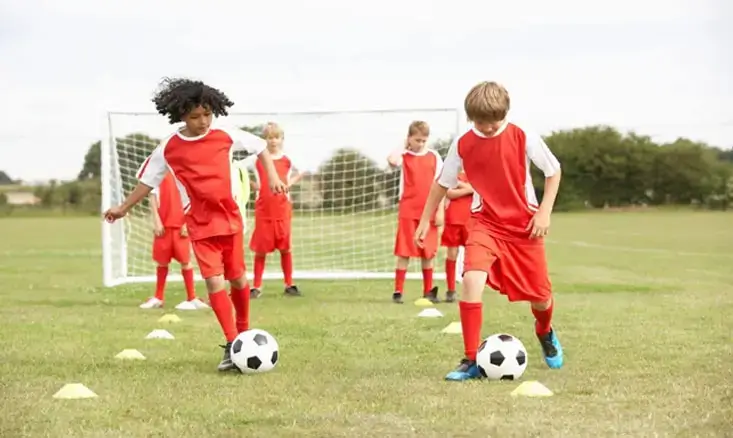
Five Star Cross Pattern Dribbling Drill
This drill combines balance and ball handling, helping players improve their ability to control the ball while maintaining stability. The five-star cross pattern dribbling drill is an excellent way to incorporate balance training into regular soccer practice.
Method
Set up cones in a cross pattern and dribble through them.
Benefits
Improves balance, coordination, and dribbling skills.
Dynamic Lunge with Ball Control
Lunges with ball control teach players to maintain balance while executing dynamic movements with the ball. This drill is part of a soccer-specific balance training program that focuses on combining balance exercises with soccer skills.
Method
Perform lunges while controlling the ball with the foot.
Benefits
Enhances balance, leg strength, and ball control.
Circle Dribbling
Circle dribbling is a versatile drill that challenges players to maintain balance while moving the ball around a circular path. It helps players develop agility and the ability to change direction quickly.
Method
Set up cones in a circle and dribble around them, changing direction frequently.
Benefits
Improves balance, agility, and dribbling control.
Incorporating Balance Drills into Training Sessions
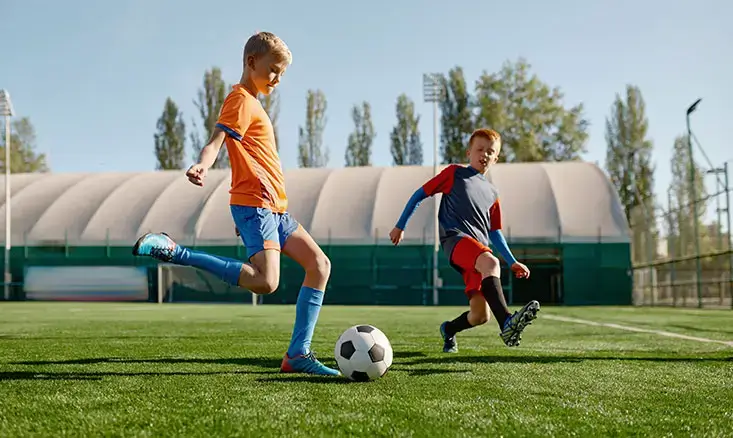
Incorporating balance drills into training sessions helps players develop these essential skills consistently.
Warm-Up Routine
Including balance exercises in the warm-up routine helps players get ready for more intense training while improving their balance. This approach ensures that players start their training sessions with a focus on stability and control.
Method
Start with balance exercises as part of the warm-up.
Benefits
Prepares the body for training and enhances balance.
Cool-Down Routine
Balance exercises during the cool-down phase can aid recovery and reinforce the skills practiced during the session. This practice helps players relax their muscles while continuing to improve their balance.
Method
Include balance drills in the cool-down phase.
Benefits
Helps with recovery and reinforces balance training.
Progressive Training
Progressive training involves starting with basic drills and gradually increasing the difficulty as players’ balance improves. This method helps players consistently develop their balance skills without becoming overwhelmed.
Method
Gradually increase the difficulty of balance drills as players improve.
Benefits
Ensures continuous development and challenges players.
Join Charlotte Rise FC Summer Soccer Camps to learn and master youth soccer aggression drills.
Conclusion
Balance drills for youth soccer players, including beginners and advanced players, are essential for developing the stability and coordination needed for effective play. Soccer-specific balance training programs, pressure cover balance drills, and core strength exercises all contribute to a player’s ability to maintain balance in various situations. By incorporating these drills into regular training sessions, young players can build a solid foundation for their soccer careers.
FAQs
How can I improve my balance for soccer?
Improve your balance for soccer by regularly practicing exercises like single-leg stands, balance beam walks, and dynamic lunges with ball control.
What are some effective ways to train for better balance in soccer?
Train for better balance by incorporating exercises such as single-leg squats, plyometric hops, and balancing on unstable surfaces into your workout routine.
What are the three types of balance exercises in soccer?
The three types of balance exercises in soccer are static balance drills (e.g., single-leg stands), dynamic balance drills (e.g., figure 8 dribbling), and core strength exercises (e.g., plank with leg lift).
How can I enhance my dynamic balance for soccer?
Enhance your dynamic balance by practicing drills like the backpedal and turn drill, partner push drills, and 1v1 shielding drills.
Is it possible to improve poor balance in soccer?
Yes, it’s possible to improve poor balance in soccer with consistent practice of balance drills and exercises, such as toe taps and side-to-side ball passes.

Did you find this useful?

LATEST BLOGS